


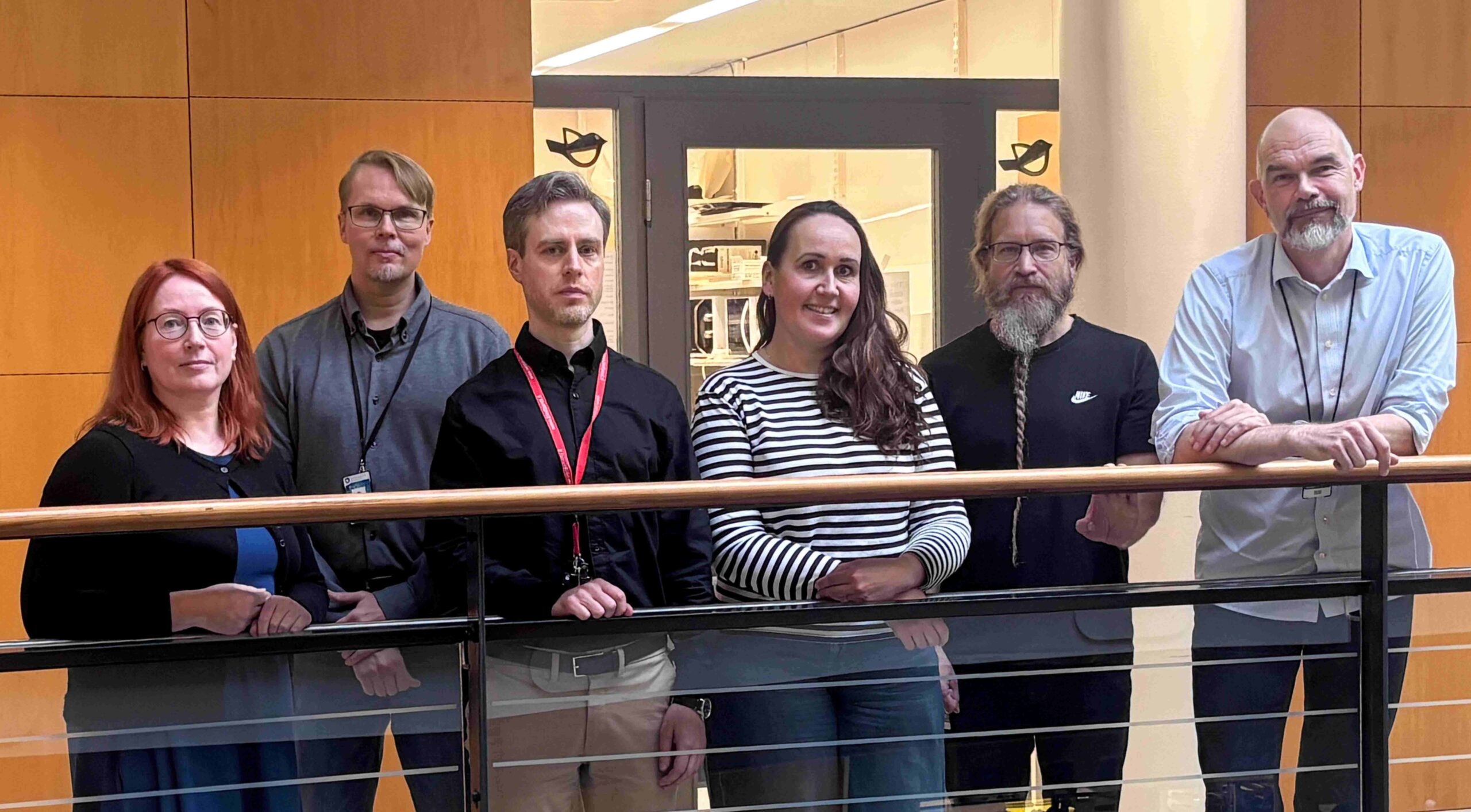
Researchers from the Blood Service pictured together. From left: Kati Hyvärinen, Jari Kätsyri, Jarmo Ritari, Jonna Clancy, Jarkko Toivonen and Mikko Arvas.
The Finnish Red Cross Blood Service Biobank holds genomic data from approximately 60,000 blood donors. Researchers use these data to identify donors with rare blood groups and compatible tissue types for patients and, for the first time, have informed donors about their risk of a hereditary iron overload disorder. The success of organ transplants is studied using separate datasets by comparing the genomes of patients and donors. Sensitive data are processed in CSC’s secure environments.
Recently, 82 blood donors received a letter from the Blood Service Biobank. The letter informed them of an increased risk of developing an iron overload disorder known as haemochromatosis and encouraged them to undergo medical examinations.
Haemochromatosis is a hereditary disease in which excessive amounts of iron accumulate in the body. The symptoms of untreated haemochromatosis vary: iron accumulation can cause fatigue or joint pain and, in the worst cases, even damage to internal organs.
“For most of those who received the letter, the information came as a surprise, and after undergoing examinations, more than a third of the recipients reported having received a diagnosis,” says Jonna Clancy, Senior Specialist at the Biobank. The finding is also taken into account in future blood donations: these donors are no longer offered iron supplements when donating blood.
The haemochromatosis letters marked the first time in Finland that blood donors participating in a biobank were provided with information about a hereditary disease risk. This changed the traditional arrangement of blood donation: in Finland, donors have traditionally received information about their blood type, along with coffee and snacks, but now the donors themselves also benefited.
Biobank donors are a fairly select group. Only three per cent of people of eligible blood-donation age donate blood each year. In total, approximately 70,000 donors have given their consent to participate in the biobank, and genomic data are available for around 60,000 of them through the FinnGen research project.
“In practice, these are very experienced donors who donate blood frequently and over a long period of time,” says Mikko Arvas, who leads the Blood Service’s blood supply chain research team.
“This group forms an exceptional biobank dataset: whereas many biobanks are based on samples from patients, blood donors are healthier than the general population on average and carry genetic factors that protect against diseases,” Clancy explains. There are only a few comparable blood donor datasets in the world.
The samples and data held by the Blood Service Biobank have been collected with the consent given by donors to participate in the biobank. Their use in research is governed by the Finnish Biobank Act (688/2012) and strict data-protection regulations. The Blood Service’s own researchers must apply for access in the same way as anyone else.
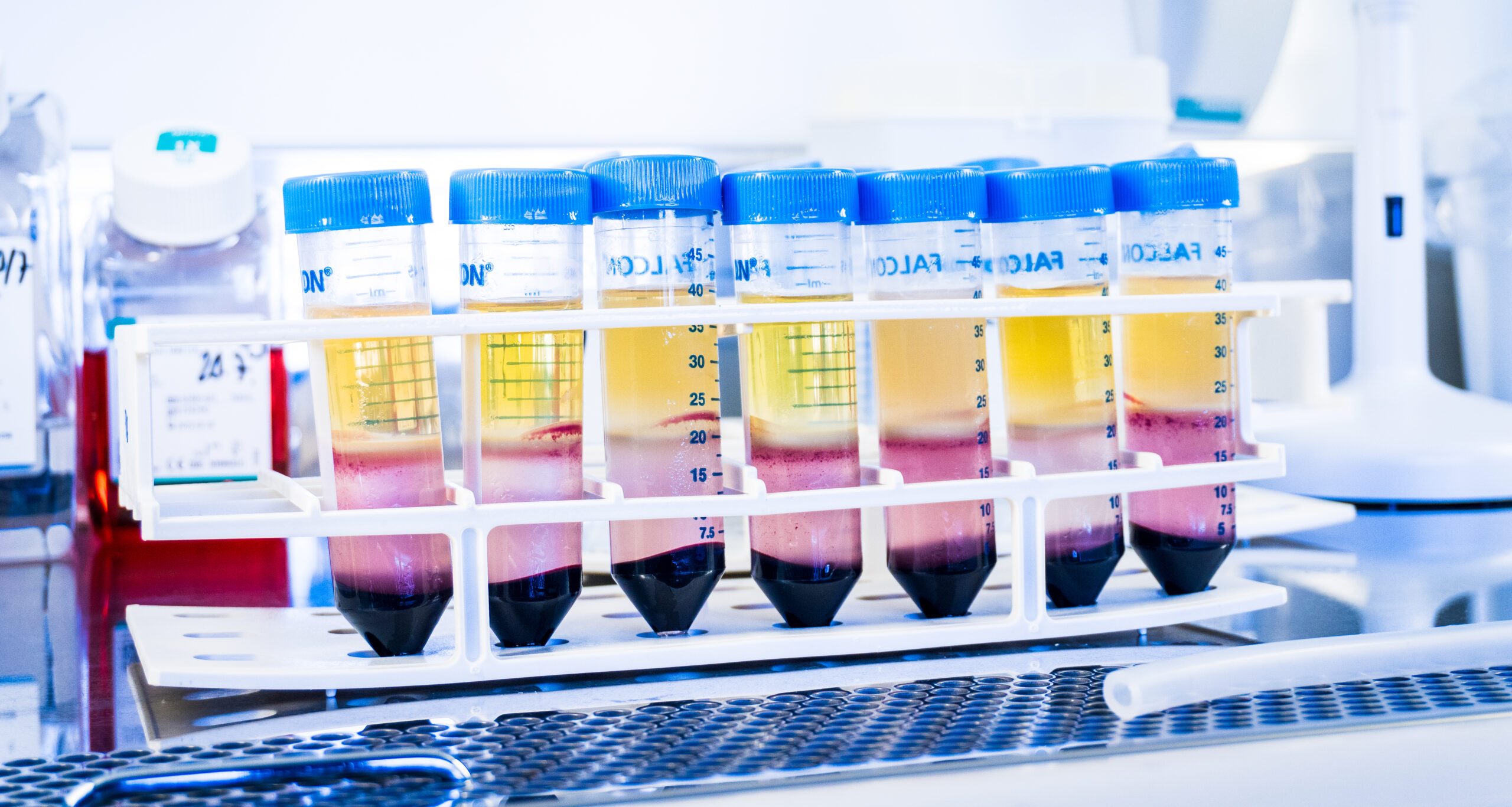
Almost everyone is familiar with the Finnish Red Cross Blood Service, but fewer people know that, in addition to collecting, processing, testing, storing and distributing blood, the Blood Service also conducts active research, which has resulted in, among other things, 75 doctoral dissertations.
One key area of research is the function of HLA molecules, which are part of our immune system. HLA molecules present fragments of a cell’s proteins on its surface. If the immune system recognises them as foreign, it destroys the cell. This is beneficial if the cell is, for example, infected with a virus or is a cancer cell, but harmful if it is part of a transplanted organ that the body may reject.
“People have different HLA types,” explains Kati Hyvärinen, Senior Researcher at the Blood Service. “The more closely the HLA types of two people match, the less likely the transplant is to cause a rejection reaction in the patient. However, the importance of HLA compatibility varies between different types of transplant.”
Particularly close HLA matching is required in stem cell transplants, where the challenge is the opposite: if the HLA type of the transplant is incompatible, immune cells transferred with it may attack the patient’s own tissues.
A good match is therefore essential. The Finnish Stem Cell Registry, maintained by the Blood Service, has more than 80,000 volunteers, but a suitable donor cannot always be found even there. In such cases, the search must be extended further afield: worldwide, 44.3 million donors have been registered.
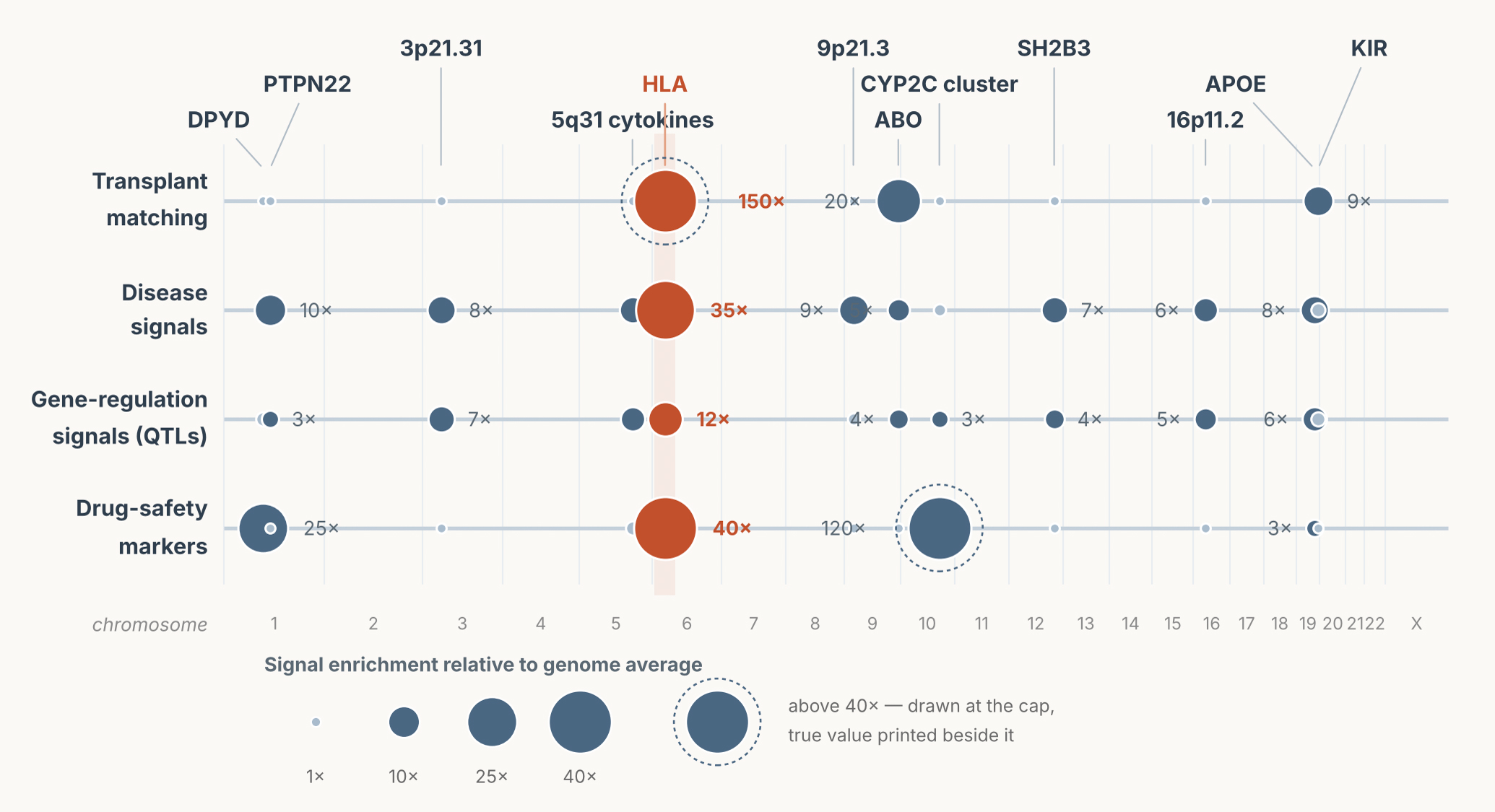
Research into tissue compatibility is, however, entering a new era. Hyvärinen and Senior Researcher Jarmo Ritari lead a project examining the entire genomes of patients and donors. HLA genes make up only a small part of the genome. The research aims to determine whether other genetic differences affect whether the body rejects a transplant.
The goal is to develop a predictive model that could identify high-risk patients and enable more individualised treatment for them.
A person’s HLA type can also be inferred computationally from the biobank’s genomic data. This approach is used to screen for potentially suitable blood donors for leukaemia patients whose immune systems have become sensitised to foreign HLA types. Producing equivalent information in the laboratory for the entire dataset would cost millions.
The same idea can be applied to blood groups. Many of us learned at school that there are four blood groups: A, B, AB and O. In reality, there are dozens of blood-group systems and more than 400 blood-group antigens. In Finland, donors’ blood is routinely typed for three systems: ABO, Rh and Kell.
Genomic data also help here: even if a person’s blood has never undergone extensive typing, a machine-learning model can predict blood-group antigens from DNA with an accuracy of over 95 per cent.
“This is not yet sufficient for blood-group determination, but it helps screen potential donors for a patient,” Hyvärinen explains.
In practice, donors with rare blood types have been identified by searching the biobank’s genomic data for certain rare blood-group antigens. The biobank has then sent those donors who are likely to have a rare blood type a request for consent to confirm this through laboratory testing. This has led to the identification of several donors who have a rare blood-group antigen that is important for blood transfusions.
Inferring both tissue types and blood groups from genomic data requires computing power. If only a few genetic variants are being studied, the analysis can be run on an ordinary laptop, but whole-genome analyses involve hundreds of gigabytes of data and tens of millions of genetic variants. These require greater computing capacity, which CSC’s research environments provide.
Because information about a person’s genetic characteristics is sensitive and subject to the EU General Data Protection Regulation, the analyses are carried out in CSC’s ePouta cloud and SD Desktop service. SD Connect is used for storing and transferring sensitive data. All three services are designed for the secure processing of sensitive research data.
Blood Service researchers praise CSC: “Few organisations in Finland can offer such a comprehensive and reliable environment for processing sensitive data.”
“They have always helped us whenever we have asked. And they have also provided us with a great deal of training,” Arvas notes.
According to Arvas, however, the bottleneck in data processing at the Blood Service is generally not computing power but the integration of different datasets.
“Hospital registers were designed for patient administration, not for research. But of course, the mere fact that these datasets are available at all with research permits is a huge improvement compared with the situation ten years ago, for example.”
A major question for the future of blood donation is whether blood donors could be genotyped more extensively. An international consortium has already developed a method that would simultaneously type blood groups, HLA and genetic variants related to donation. However, the method does not yet have the CE marking required for its use outside research activities.
“The benefits would be clear,” Arvas notes. Introducing the method could generate cost savings for healthcare and enable, for example, more individualised intervals between donations.
Health information obtained through blood donation, such as a hereditary risk of an iron overload disorder, could provide added value for both new and existing blood donors. At least 22,000 new donors are needed each year, but the larger the group of people who donate, the less frequently each individual would need to give blood.
“It has been calculated in Denmark that if everyone donated blood once in their lifetime, no one would need to donate more than once,” Arvas says.
Finnish Red Cross Blood Service Biobank
The Blood Service Biobank collects samples and data from blood donors for research purposes. The material is used in research on blood groups, tissue compatibility and hereditary diseases, among other areas.
CSC – IT Center for Science Ltd
is a non-profit limited company owned by the Finnish state and administered by the Ministry of Education and Culture. CSC maintains and develops centralised information technology infrastructure.
csc.fi
research.csc.fi/cloud-computing
ELIXIR
is a distributed European research infrastructure serving the life sciences. It brings together data resources, software tools, training, cloud services and high-performance computing resources from 23 countries and the European Molecular Biology Laboratory (EMBL). Its Finnish node is CSC – IT Center for Science Ltd.


 ELIXIR is partly funded by the European Commission