


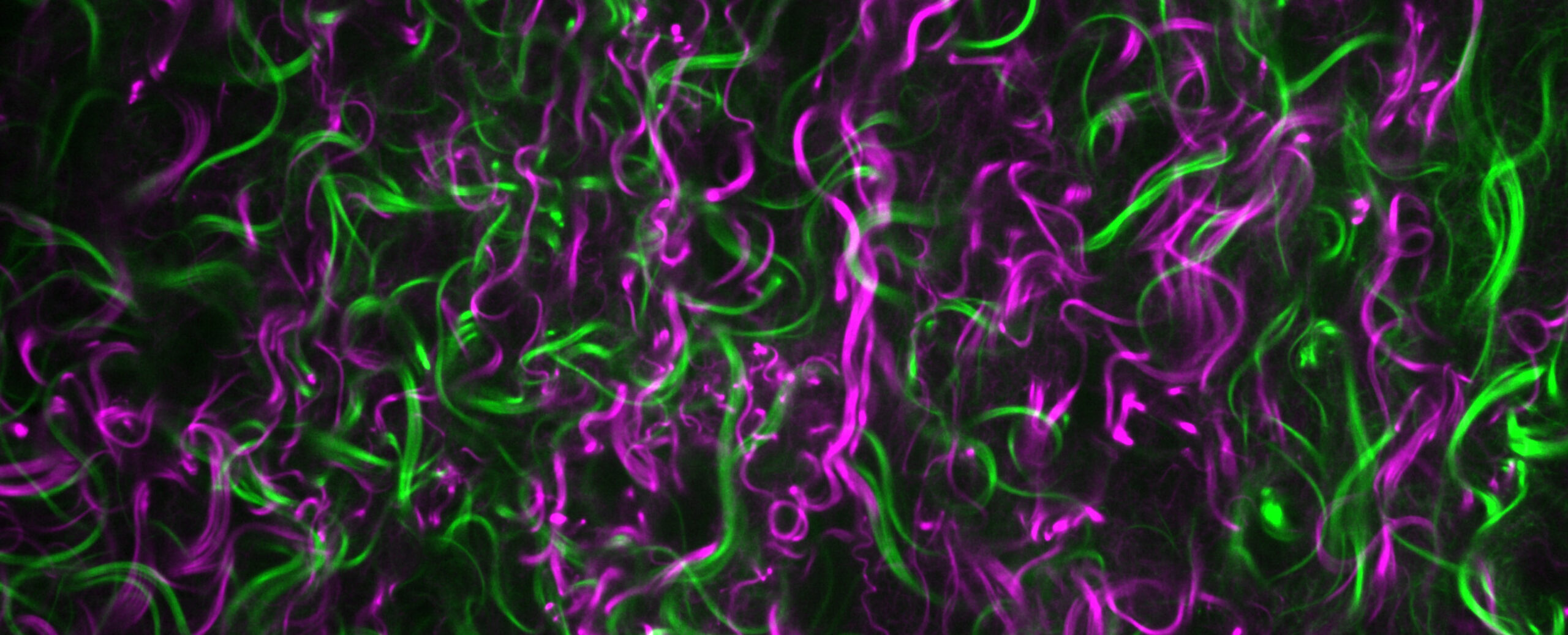
Curly collagen (green and magenta) found in the proximity of a breast tumour.
The movement and adhesion of cells is still poorly understood, even though the phenomenon is of great significance in, for example, the spread of cancers. To study it, Guillaume Jacquemet’s group has even had to develop their own software.
Many who lived their childhood in the 1980s may remember the animated series Il était une fois… la Vie (Once Upon a Time… Life). In it, the human body appeared as a bustling community, where industrious, oxygen-carrying red blood cells and tiny platelets wandered along blood vessels.
The heroes of the story, however, were the white blood cells, which alertly arrived on the scene whenever intruders such as bacteria, viruses or cancer cells entered the body.
But how do white blood cells actually find where they are needed?
In the animation, the matter is passed over as self-evident – after all, we know that our immune system can respond to threats. But that is where our certain knowledge ends, says Guillaume Jacquemet, associate professor of bioimaging at Åbo Akademi.
“We know that white blood cells respond to their environment, seek out where they are needed, and attach themselves in place with proteins. But how they actually do all of this is still in many ways open.”
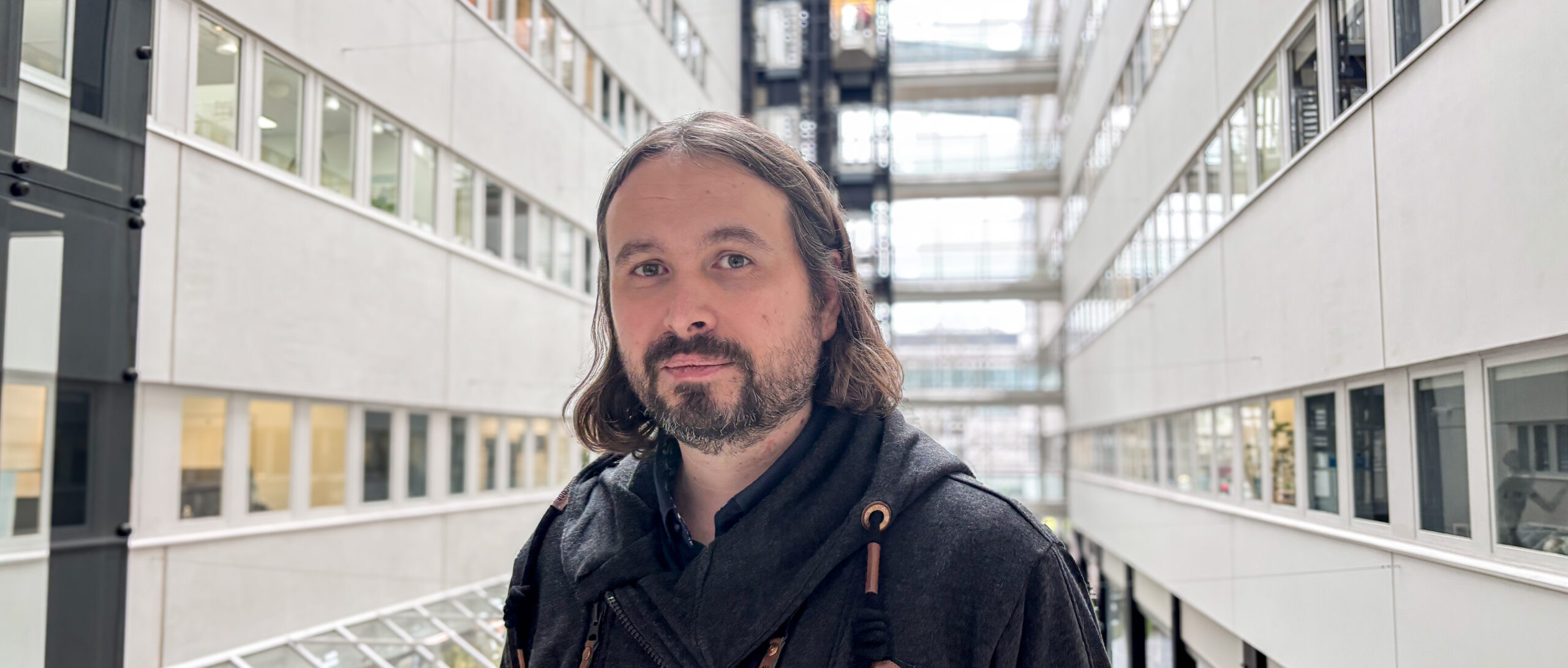
Jacquemet has studied cell movement for a long time, beginning with his doctoral thesis work at the University of Manchester. He arrived in Turku after his doctoral defence to do postdoc research and settled in. Jacquemet founded his own Cell Migration research group in 2019. Currently, the group has 13 researchers.
The majority of the cells in our body do not move anywhere. Exceptions include movement during embryonic development, as well as cells of the immune system – and one of its enemies, cancer cells. It is precisely the migration of cancer cells in the body that is the main research subject of Jacquemet’s group.
“Cancers develop in different ways,” Jacquemet says.
Some form a clear tumour, which can often be surgically removed if it is detected in time. More unpleasant are cancers that quickly begin to send cells elsewhere in the body to form metastases. Cancer that has spread in this way is often difficult to treat.
The particular focus of interest of Jacquemet’s group is pancreatic cancer. Pancreatic cancer is often difficult to detect, as its early-stage symptoms are vague. In addition, it often spreads aggressively. Therefore, the prognosis is often poor: fewer than ten per cent of patients survive.
Jacquemet and his group therefore strive to better understand the way in which cancer cells select where to attach.
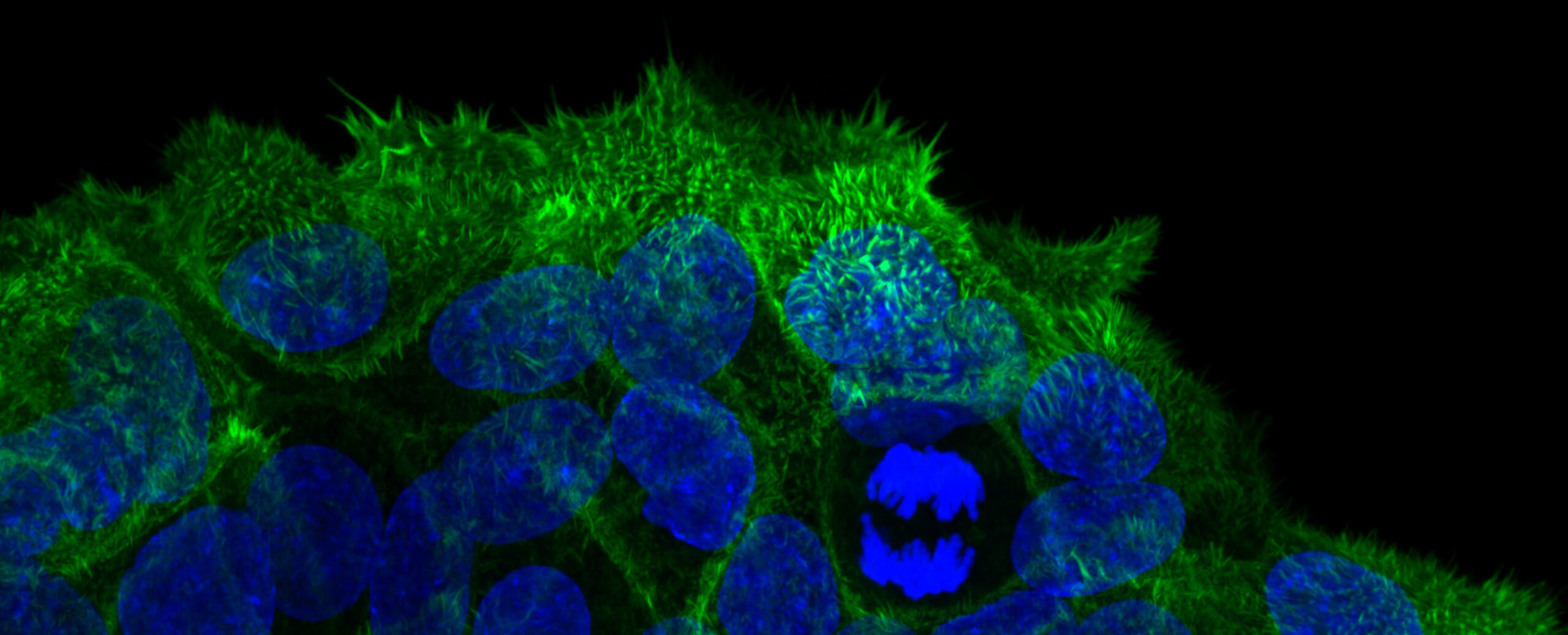
An essential role in this is played by filopodia, which are hair-like protrusions projecting from cell walls. With the help of filopodia, cells observe their environment and search for suitable places.
“It is clear that the filopodia of cells use various proteins with which they attach, but we do not yet understand the whole picture.”
The observations are nevertheless useful. For a long time it was thought, for example, that pancreatic cancer cells would attach to the cell wall by the same mechanism as white blood cells. More detailed analysis, however, showed that the mechanisms are similar but different. Cancer uses slightly different proteins than white blood cells.
A small observation can be of great significance in, for example, the development of treatments.
“If one thinks of, say, a drug that would block the function of a protein used by white blood cells but would not after all affect cancer cells, such a drug would cause more harm than benefit.”
Drug treatments are, however, far from Jacquemet’s research. The Cell Migration group conducts above all basic research, in which the aim is to understand the biological functions of cells.
There is no shortage of basic questions. Not all cells, for example, move alone but in clusters. This kind of movement is understood even more poorly.
“An individual cell has to respond to its environment by itself, but moving in a group requires cells to take on different roles. We do not yet understand, however, how the cells in a cluster communicate with each other – or even what role the cells in the centre have in the whole.”
In a healthy human, cells move in groups mainly as part of embryonic development. Cancer cells, however, may also move in clusters.
“This we still understand very poorly.”
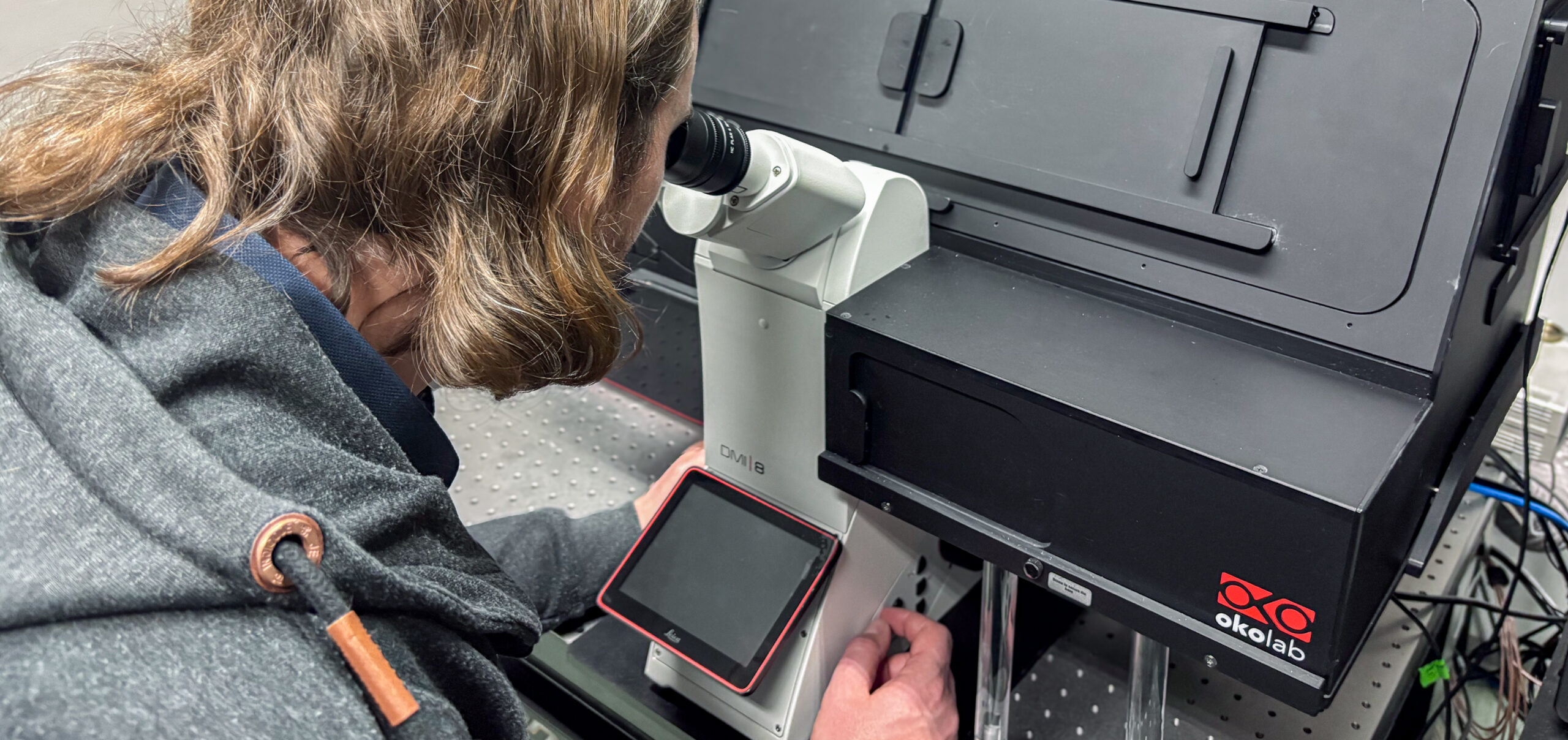
When starting out as a researcher, Jacquemet did a great deal of research with microscopes.
Modern microscopes take a large number of images. When following cell movement in microfluidic devices, the typical imaging frequency often resembles film, that is, approximately 24 images per second. This produces smooth movement.
Large numbers of images combined with the flow of cells make the observation of individual cells laborious. Information technology could be of help in screening, but unfortunately suitable free tools were poorly available.
When the coronavirus pandemic closed the laboratories, Jacquemet decided to use his time to build his own analysis tools. He taught himself to code and worked together with his colleagues to develop the ZeroCostDL4Mic tool, which helps identify interesting events in cell movement.
The tool, published as open source code, was a success, and it has since been used in thousands of studies around the world.
Nowadays Jacquemet’s group develops software routinely as part of their research. Three people from the research group code almost full-time.
“All the code we make originates from the needs of our research. This enables very natural development work: we think about what we need, and then we make it.”
The group makes all tools openly available, as well as their datasets, which they deposit in public databases such as Zenodo, PRIDE and BioImage Archive, both of which are ELIXIR Core Data Resources.
“In my view, offering tools for use cannot really be separated from the openness of data. Without the software, others cannot themselves verify how the data has been analysed and how the software affects the end result.”
Open source code is also an ideological solution.
“When software is created as part of publicly funded research, offering it for free is in my view the right solution.”
Besides, open code may find applications that one would not guess in advance.
“We have ourselves also used software developed by astronomers as a guide for our development work, software that was originally designed for tracking the movements of celestial bodies. The same logic works, however, for both planets and cells.”
Open databases help in this too. Openly available data collected by researchers around the world is used as test material when developing new tools.
In recent years, the significance of artificial intelligence has become prominent in software development. Learning artificial intelligence can analyse vast data masses from images and identify interesting events in them.
This makes the researcher’s work easier but on the other hand requires computing power.
“Although the majority of our software runs on ordinary computers, from time to time we also need supercomputers,” Jacquemet says.
In that regard, everything runs smoothly, however. Collaboration with CSC – IT Center for Science has always been flexible, and even the more unusual customer has been served well.
Where there would be room for improvement, however, is the funding of software work – especially in maintenance.
“In practice, all our software is created as by-products of research projects. This model works well during the project, but after the project ends, many software tools are at risk of being left unsupported,” Jacquemet notes.
“In order for software to remain usable, it must also be maintained. In my view, it should be possible to apply for funding for this more easily. Now the risk is that well-functioning and widely used software is left to fend for itself, when no one takes responsibility for continuity.”
Text and video: Juha Merimaa
Photos: Juha Merimaa and CellMig Gallery, cellmig.org/gallery/
20 May 2026
Read the article in PDF format.
More information:
CSC – IT Center for Science Ltd
is a non-profit limited company owned by the state and administered by the Ministry of Education and Culture. CSC maintains and develops the state-owned centralised information technology infrastructure.
https://research.csc.fi/cloud-computing
ELIXIR
is a distributed European infrastructure serving life science research. It offers, in a combined way, data resources, software tools, training, cloud services and high-performance computing resources from 23 countries and the European Molecular Biology Laboratory EMBL. Its Finnish node is CSC – IT Center for Science Ltd.


 ELIXIR is partly funded by the European Commission